The Aurangabad Caves are a prime destination of historic importance. Apart from being a marvel of bygone era, these caves are also a prelude to the grander and more celebrated Ajanta Ellora Caves. Read on.
 |
|
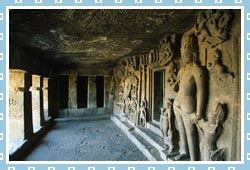
The Aurangabad Caves are tucked between the Satara and Sihyachal range of hills in Aurangabad. Located just 2 km from the famous 'Bibi Ka Maqbara', the Aurangabad Caves are a standing testament to India's glorious past. Constructed around the 2nd or 3rd century like its many counterparts, the caves are a cluster of three sets of Buddhist caverns separated by a distance of 500 meters from each other. The heterogeneous rock formations are the showstoppers of this delightful place and attract hordes of tourists and avid history-lovers every year. The first clusters of Caves, also known as 'Cave 1', are the incomplete set of caves with old-fashioned pillars and obscure ornamentation. Cave 2, a square-shaped shrine resembling traditional temples, has a mammoth image of a seated Buddha. Several other figures of Buddha can also be seen adorned on the walls and the porch. Cave 3 is believed to be the largest and the most beautiful of them all. A large verandah with a huge monastery resembles the interiors and the architecture at Ajanta. A Buddhist shrine, the popular carving of the "Sutasoma Jataka" and the floral/geometrical architecture can be seen here. The Aurangabad Caves is a beautiful tourist destination. Scroll down for more!
Places To See
Apart from the 3 sets of Aurangabad caves, there are a variety of other places in and around the area that you can visit. One of the most popular choices is the Bibi Ka Maqbara which is situated only 2 km from the caves. The Aurangabad city walls also offer a beautiful view of the settlement and stand as an engineering marvel. If you are looking to visit places of religious importance, then you could visit the Aurangabad Masjids and the 'Panchakki'. The 'Sonari Mahal' in Aurangabad that once housed a painting made of gold, may now stand in a ruinous condition but still holds as a very important tourist destination of modern times.
Shopping
Aurangabad is famous for shopping and there are a few places in and around the Aurangabad Caves that promise to intrigue you with a unique shopping experience. Famous 'Paithani' saris, semi-precious stones, polished jewelery dating back to the Mughal period and the renowned 'Himroo' shawls can all be found here. Some of the best shopping destinations are Noor Super Bazaar, Glass Land, Anjali Cintorium and Tej Collections.
Eating Out
If this is your first trip to Aurangabad, then you should not miss the local Aurangabad delights. Some of the best local eateries are 56 Bhog, Indian Street Restaurant, Biryani House and Chimnay.
Accommodation
Budget Hotels